

Libya’s NOC Targets 660,000 BPD Refining Capacity to End Fuel Import Dependency

Executive Summary
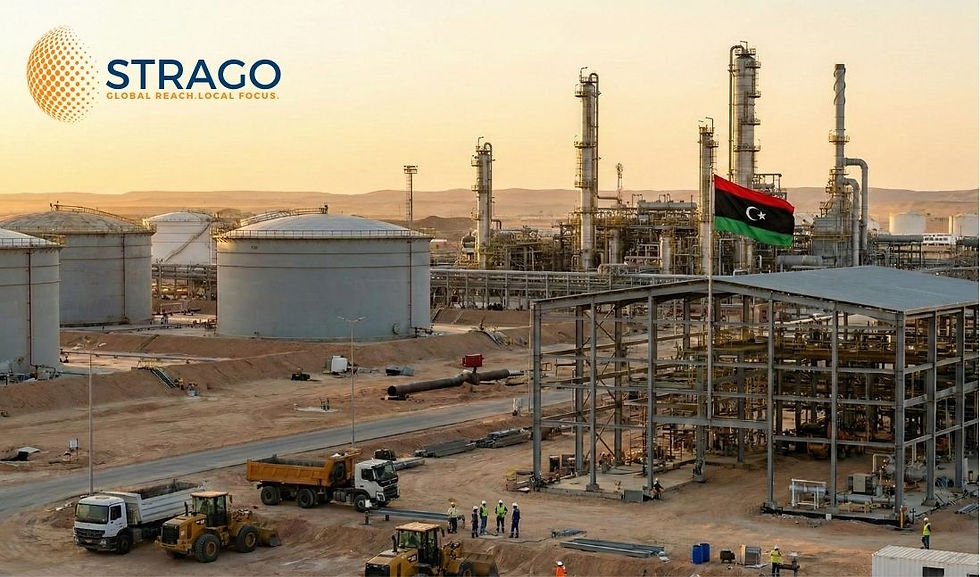
Libya’s National Oil Corporation (NOC) has unveiled a comprehensive strategic plan to nearly double the country's crude oil refining capacity from 380,000 barrels per day (bpd) to 660,000 bpd. The initiative aims to modernise the downstream sector, eliminate a costly dependency on fuel imports, and position Libya as a key regional energy supplier.
The Crisis: Why Expansion is Critical
Despite holding Africa's largest proven oil reserves, Libya currently relies heavily on imported fuel due to outdated infrastructure and long-term facility closures.
Capacity Gap: While nominal refining capacity stands at 380,000 bpd, actual production is approximately 180,000 bpd.
The Ras Lanuf Factor: The widening supply gap is largely attributed to the shutdown of the Ras Lanuf refinery (220,000 bpd capacity) since 2013.
Financial Drain: In 2024, Libya imported over 41 million litres of fuel per day, costing the state treasury nearly $9 billion—a significant increase from $3 billion averaged during 2016-2019.
Strategic Roadmap & Timelines
The NOC’s expansion program rests on two pillars: modernising existing refineries (Zawia, Tobruk, Sarir) and constructing new facilities.
New Infrastructure: The plan includes a major new refining facility and the long-awaited South Refinery near the Sharara oil field. While early announcements highlight a massive capacity increase, the South Refinery is specifically designed to address fuel shortages in the Fezzan region, producing cooking gas, jet fuel, and diesel.
Self-Sufficiency Targets:
2033: Self-sufficiency in cooking gas (LPG).
2034: Self-sufficiency in diesel.
2037: Self-sufficiency in gasoline.
Broader Energy Goals
This downstream expansion is synchronised with upstream efforts to boost crude oil production. NOC Chairman Masoud Suleiman confirmed the corporation aims to raise crude output to 1.6 million bpd by late 2026, restoring production to pre-2011 levels and ensuring a steady feedstock for the expanded refining network.
Key Figures at a Glance
Indicator | Current Status (2024/25) | Target / Goal |
Nominal Refining Capacity | 380,000 bpd | 660,000 bpd |
Actual Refining Output | ~180,000 bpd | -- |
Daily Fuel Imports | >41 million litres | 0 (Self-sufficiency) |
Annual Import Bill | ~$9 Billion | -- |
Crude Oil Production | ~1.38 million bpd | 1.6 million bpd (2026) |
Legal Disclaimer:
The information provided in this blog post is for general informational purposes only and does not constitute financial, investment, legal, or other professional advice. While we strive to provide accurate and up-to-date information, we make no representations or warranties of any kind, express or implied, about the completeness, accuracy, reliability, suitability, or availability with respect to the blog post or the information, products, services, or related graphics contained on the blog post for any purpose. Any reliance you place on such information is therefore strictly at your own risk. Readers are encouraged to conduct their own due diligence and consult with appropriate professionals before making any decisions based on this information. The views and opinions expressed in this post are those of the author(s) and do not necessarily reflect the official policy or position of any other agency, organisation, employer, or company.


